

Objetivo: Realizar una aproximación inicial a las actitudes y el conocimiento de los cirujanos generales mexicanos sobre los quirófanos sostenibles y las políticas net zero. Los quirófanos son los principales productores de emisiones de gases con efecto invernadero del sistema de salud. La implementación de medidas para lograr quirófanos sustentables debe ir precedida del conocimiento de las prácticas actuales, del interés del personal quirúrgico sobre el tema y de las posibles áreas de oportunidad.
Métodos: Estudio observacional, prospectivo, de corte transversal, basado en una encuesta anónima y virtual distribuida por correo electrónico a todos los socios de la Asociación Mexicana de Cirugía General entre octubre de 2023 y marzo de 2024. Las preguntas se enfocaron en cinco temas: datos generales, uso de textiles, técnicas de anestesia, generación de desechos y uso de materiales desechables, y consumo de agua y energía.
Resultados: Se obtuvieron 726 respuestas. El 12% conocían el término net zero e incorporaban medidas relacionadas en su práctica diaria. El 8.4% refirieron que en su hospital existe un plan de acción al respecto.
Conclusiones: La encuesta revela un bajo nivel de conocimiento sobre el quirófano sostenible y las prácticas net zero entre los cirujanos encuestados, así como la escasez de planes de acción para alcanzar quirófanos «verdes» en México; sin embargo, destaca el interés de los encuestados en aprender sobre el tema.
Palabras clave: Cirugía sostenible; Huella de carbono; Quirófano; Gases con efecto invernadero; Impacto ambiental
Introduction
Climate change is a global emergency. An increase in global temperature of 1.5 °C compared with the pre-industrial era will result in ecosystem destruction and species extinction, threatening the continued existence of humankind. Melting ice secondary to global warming and a rise in sea level of only 10 mm have already generated an unprecedented environmental impact.1
Droughts, floods, fires, increases in vector-borne diseases, epidemics, among other events, place pressure on health care systems worldwide to adapt, as they attempt to develop strategies to respond to these situations while simultaneously generating a carbon footprint and greenhouse gas emissions accounting for almost 5% of total global emissions.2
Operating rooms are estimated to produce 50% to 70% of the waste generated in a hospital. Their environmental impact is 3-6 times greater than that of the rest of the hospital, partly because of intensive energy consumption.3
Since the Paris Agreement (1996),4 and more recently at the annual meetings of the United Nations Climate Change Conference, governments worldwide have committed to reducing carbon emissions by 50% by 2030 and achieving a net-zero emissions system by 2050.5 Mexico ranks 16th among 266 countries in terms of carbon emissions, and its health care system ranks 11th among the most polluting health care systems worldwide.6
Acknowledging our responsibility as leaders and as contributors to carbon emissions in the operating room should be a moral imperative in our immediate personal and professional conduct.
The objective of this study was to determine, through a survey, how much members of the Asociación Mexicana de Cirugía General (AMCG) know about the pollution generated by operating rooms and its causes, and to identify general characteristics regarding carbon-equivalent emissions in operating rooms in different regions of the country, with the aim of designing environmentally sustainable strategies appropriate to the Mexican context in the near future.
Methods
We conducted an observational, prospective, cross-sectional study based on an anonymous online survey between October 2023 and March 2024. The survey was developed internally by the authors, using previously published surveys related to the environment and health care systems as references.7,8 It included a total of 20 multiple-choice questions designed to obtain information across 5 domains: general data (age, geographical location, health care system, level of care), use of textiles (scrubs and surgical drapes), anaesthesia (technique, anaesthetic gases, medication disposal), generation of waste and single-use consumables, and water and energy consumption.
Before distribution, the survey was pilot-tested with 4 surgeons and modified according to their feedback. The final version was created using the Google Forms® platform for online completion. An invitation to participate was sent by email by the AMCG to all its members (3804). No participant received any material or financial incentive. The survey was administered between November 2023 and March 2024; 3 emails were sent on different dates inviting members to participate. The questionnaire was completed online using the Google Forms® platform. Residents, general surgeons, and subspecialists were included, whereas individuals who did not work in Mexico or who were no longer actively engaged in surgery (eg, retired surgeons) were excluded.
Statistical analysis was performed using STATA statistical software (version 14, StataCorp, College Station, Texas, United States). Responses to each question were calculated as frequency distributions and are presented as percentages.
Results
General data
The survey was sent to 3804 AMCG members, of whom 726 responded (response rate, 19%). Most participants were surgeons aged 46-60 years (264; 36.4%), followed by those aged 30-45 years (230; 31.0%), those older than 60 years (188; 25.9%), and those younger than 30 years (44; 6.1%).
Members from all 32 federal entities participated. The most highly represented were Mexico City (201; 27.7%), State of Mexico (81; 11.2%), Jalisco (41; 5.6%), Nuevo León (35; 4.8%), Guanajuato (30; 4.1%), and Veracruz (29; 4.0%). The states from which the fewest responses were obtained were Baja California Sur (3; 0.4%), Campeche (3; 0.4%), Colima (5; 0.7%), Durango (5; 0.7%), and Yucatán (6; 0.8%).
Regarding whether the surveyed surgeons worked in the public or private sector, approximately one third worked exclusively in private practice (262; 36.1%), whereas the remainder worked in at least 1 government institution (464; 63.9%). More than half of respondents reported working in a secondary-care hospital (444; 61.0%), whereas the remainder worked in tertiary-care hospitals (277; 38.0%); 5 responses were completed incorrectly.
Among surgeons working in public hospitals, most responses were obtained from staff of the Secretaría de Salud (SS) (175; 37.5%) and the Instituto Mexicano del Seguro Social (IMSS) (168; 36.0%). Other public institutions included the Instituto de Seguridad y Servicios Sociales de los Trabajadores del Estado (ISSSTE) (55; 11.8%), IMSS-Bienestar (32; 6.8%), and the Secretaría de la Defensa Nacional (SEDENA) (10; 2.1%). Hospitals of the Mexico City Government, the Instituto de Seguridad Social del Estado de México y Municipios (ISSEMYM), Petróleos Mexicanos (PEMEX) hospitals, and other hospitals accounted for 5.4% of the sample (Table 1).
Table 1. General characteristics of the study population
| Variable | n | % |
|---|---|---|
| Age range (years) < 30 30-45 46-60 > 60 | 44230264188 | 6.13136.425.9 |
| Hospital system Private Public SS IMSS ISSSTE IMSS-Bienestar SEDENA Other* GCDMX ISSEMYM PEMEX | 26246417516855321010754 | 36.163.937.53611.86.82.12.11.51.00.8 |
| Level of care Secondary care Tertiary care Invalid responses | 4472745 | 61372 |
|
GCDMX: Hospitales del Gobierno de la Ciudad de México; IMSS: Instituto Mexicano del Seguro Social; IMSS-Bienestar: Instituto Mexicano del Seguro Social-Bienestar; ISSEMYM: Instituto de Seguridad Social del Estado de México y Municipios; ISSSTE: Instituto de Seguridad y Servicios Sociales de los Trabajadores del Estado; PEMEX: Hospitales de Petróleos Mexicanos; SEDENA: Secretaría de la Defensa Nacional; SS: Secretaría de Salud. * Other: SEMAR: Secretaría de Marina; OPD: decentralised public body: Hospital Civil de Guadalajara: OPD Hospital Civil Fray Antonio Alcalde: Magisterio, Ichisal, Hospital Civil de Culiacán, and Hospital de Maestros del Sindicato Nacional de Trabajadores de la Educación (SNTE) Secc. 50. |
||
Textiles
The surveyed surgeons confirmed that the reusable textiles in most hospitals were surgical scrubs (520; 71.6%) and surgical drapes and gowns (452; 62.2%). Surgical caps (89; 12.2%) and shoe covers (52; 7.0%) were reusable to a lesser extent.
A total of 17.6% (128) of surgeons responded that no surgical textiles were reusable at their hospital. Of these, most reported working in Mexico City (53; 41.4%) and the State of Mexico (25; 19.5%). Other states in which no textiles were reused in some hospitals were Jalisco (10; 7.8%), Nuevo León (5; 3.9%), Veracruz (5; 3.9%), Hidalgo (4; 3.1%), Chihuahua (4; 3.1%), Sinaloa (3; 2.3%), Coahuila (2; 1.5%), Querétaro (2; 1.5%), Quintana Roo (2; 1.5%), Tabasco (2; 1.5%), Baja California Norte (1; 0.7%), Chiapas (1; 0.7%), Colima (1; 0.7%), Guanajuato (1; 0.7%), Morelos (1; 0.7%), Oaxaca (1; 0.7%), San Luis Potosí (1; 0.7%), Tamaulipas (1; 0.7%), and Yucatán (1; 0.7%).
More than half of the hospitals in which textiles were not reused were tertiary-care hospitals (78; 60.9%) and private institutions (68; 53.9%). Public hospitals in which no textiles were reusable (60; 46.0%) belonged mainly to the SS (22; 36.6%), ISSSTE (17; 28.3%), and IMSS (13; 21.6%).
Anaesthesia
Regarding the ordering of preoperative tests in low-risk patients, most respondents (332; 45.7%) reported doing so according to their institutional guidelines, in accordance with international recommendations. Other responses included ordering only those laboratory tests they considered essential (232; 31.8%), ordering them routinely according to established customary practice for all patients (115; 15.8%), and requesting whatever the anaesthesiologist required to avoid cancellation of surgery (48; 6.6%). Most respondents who selected either of the latter 2 responses were aged between 31 (85; 52.0%) and 45 years (59; 36.5%). Almost all members who stated that they ordered whatever tests their anaesthesiologist required to avoid cancellation of the procedure worked in a public hospital (45; 93.7%).
General anaesthesia was used in half (370; 50.9%) of the procedures performed by AMCG surgeons, whereas regional anaesthesia was used in almost the other half (334; 46.0%). Most procedures performed under regional anaesthesia took place in public hospitals (258; 77.2%).
According to the survey results, total IV anaesthesia was used in very few procedures (15; 2.0%). One third of respondents (205; 28.2%) did not know which anaesthetic gas was used during their procedures requiring general anaesthesia. Among those who did know, the most widely used gas was sevoflurane (455; 62.6%), whereas desflurane (32; 4.4%) and isoflurane (30; 4.1%) were used much less frequently. Most surgeons using desflurane in their procedures worked in Mexico City and the State of Mexico (14; 43.7%). No difference in its use was found between private hospitals (16; 50.0%) and public hospitals (16; 50.0%).
The final disposal method for unused medications remaining at the end of surgery was unknown to 38.7% (281) of respondents. One third (235; 32.3%) reported appropriate disposal in dedicated special containers. In more than one quarter of cases (210; 28.9%), medications were disposed of suboptimally: in bags intended for potentially infectious biological waste (PIBW) (118; 16.2%), in municipal waste bags (78; 10.7%), or down the sink (14; 1.9%).
Waste
A total of 44.0% (318) of surgeons responded that most waste generated in their operating rooms was municipal waste disposed of in black bags; one third reported that it was non-infectious hospital waste disposed of in yellow bags (232; 32.0%); 16.8% (122) reported that most of the waste generated during their procedures was highly infectious and disposed of in red bags; and 7.4% (54) stated that they did not know or had not paid attention to the type of waste generated in their operating rooms.
Regarding the disposal of PIBW generated in the operating room, more than three quarters of surgeons (571; 78.6%) responded that it was collected by an external service, whereas a small proportion reported that it was incinerated (22; 3.0%) or deposited in landfills (5; 0.6%). A total of 17.6% (128) did not know the final destination of their hospital’s PIBW.
Respondents were given a list of items and asked to indicate which they routinely discarded in red PIBW bags: disposable towels, orotracheal intubation tubes, suction tubes or cannulas, intravenous solutions, urinary catheters, urine collection bags, face masks, surgical caps, surgical drapes, casts and bandages, wrappers or packaging, alcohol-soaked gauze, used nappies, disposable bowls, and gloves. The final response option was “none” and was selected in 31.7% (227) of cases. Of all listed items, bandages and casts were selected by at least 21 participants (2.9%), whereas urinary catheters were selected by 334 (46.0%) (Fig. 1).
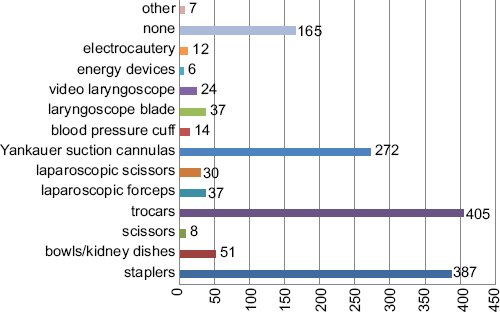
Figure 1. Disposable consumables identified by respondents in their operating rooms.
Disposables and supply chain
Respondents were provided with a list of consumables and asked to identify which were disposable in their operating rooms. Among the listed consumables, laparoscopic trocars (405; 55.7%) and surgical staplers (387; 53.3%) were the most frequently identified as disposable. Yankauer suction tips were identified as disposable in 37.4% (272) of cases. A total of 22.7% (165) of respondents reported that none of the consumables on the list were disposable at their hospital (Fig. 2).

Figure 2. Materials and consumables routinely discarded in red bags for potentially infectious biological waste (PIBW), according to respondents.
In the open-response option for listing other disposable consumables used in their hospitals, surgeons (7; 1.0%) mentioned Guedel airways, drying pads, suction and drainage collection systems, specimen retrieval bags, electrodes, staples, bags for laparoscopic equipment, loops, central venous catheters, urinary catheters, and Nelaton-type decompression catheters.
Ventilation and lighting systems
One quarter of respondents (181; 24.9%) did not know how the air-exchange, temperature-control, and lighting systems operated in their operating rooms. A similar proportion (179; 24.6%) reported that these systems remained active 24 hours a day in their operating rooms, meaning that lights remained on even when nobody was in the room and that the number of air exchanges was not reduced.
Only 34.8% (253) of respondents reported that the ventilation, temperature-control, and lighting systems in their operating rooms were activated only when necessary, whereas 15.5% (113) stated that their units had no ventilation systems.
Surgical hand preparation and water
A high percentage of respondents (516; 71.0%) had access to surgical sinks equipped with sensors, which contributes to water conservation during surgical hand preparation.
Almost half (342; 47.1%) used water and a preloaded disposable brush for surgical hand preparation before a procedure; however, one third (218; 30.0%) of the surveyed surgical staff reported using reusable brushes, and only 7.8% (57) used waterless antiseptic solutions. The remaining 14.9% (108) reported performing hand preparation with water and chlorhexidine.
Knowledge
A total of 46.2% (336) of respondents did not know the term net zero or what it referred to; 41.4% (301) had heard the term at some point but were unclear about its meaning. Only 12.0% (89) knew what it meant and incorporated measures aimed at achieving it into their daily practice. This 12.0% was particularly concentrated in Mexico City (32; 35.9%). Other states in which some net-zero measures were reported to be implemented in operating rooms included the State of Mexico (8; 8.9%), Puebla (7; 7.8%), Morelos (5; 5.6%), Nuevo León (5; 5.6%), Guanajuato (4; 4.4%), and Veracruz (4; 4.4%). Most surgeons who reported using net-zero measures in their daily practice were older than 46 years (76; 85.3%), with the greatest proportion being aged 46-60 years.
A total of 91.5% (n = 659) of participants reported that their hospitals had no established action plan for achieving “green” operating rooms. Respondents who reported that their hospitals did have an action plan (61; 8.4%) were distributed across Mexican states as shown in figure 3. Most hospitals with an action plan were private hospitals (42; 68.8%); the 19 public hospitals nationwide with eco-surgery plans belonged to the IMSS, SS, ISSSTE, IMSS-Bienestar, and PEMEX.

Figure 3. Mexican states in which, according to respondents, there are hospitals with action plans for achieving “green” operating rooms. The first number corresponds to the total number of hospitals in that state with an action plan, the second number corresponds to private hospitals, and the subsequent abbreviations correspond to public hospitals in that state that have an action plan.
Encouragingly, almost all participants (704; 97.0%) responded that they were interested in learning what they could do to reduce carbon emissions generated during surgery.
Discussion
Increasing numbers of countries are joining the global effort to achieve health care systems that are neutral in terms of greenhouse gas generation. Mexico is the Latin American country that generates the greatest amount of carbon dioxide emissions and has the second most polluting health care system, behind only Brazil.6 Operating rooms make a substantial contribution and therefore represent an important setting in which environmentally favourable changes can be implemented.
Changing established behaviours that are routinely performed in any human activity, such as during surgical care in hospitals in our country, is challenging. Before attempting to change these behaviours, it is essential to understand them. As a starting point, this survey was designed to explore the knowledge and attitudes of Mexican surgical personnel regarding pollution caused by operating room use.
The term net-zero carbon emissions refers to achieving a neutral balance between the amount of greenhouse gases produced and the amount removed from the atmosphere.5 Consistent with other studies,7–9 almost all respondents were interested in learning how to reduce carbon emissions generated during surgery, but only a small proportion knew the term net zero and implemented measures aimed at achieving it in their daily practice (12.0%), and an even smaller percentage (7.5%) recognised that their hospital had an action plan for implementing “green”“ operating rooms.
Lack of information is the first barrier that must be overcome to reduce the carbon footprint generated in an operating room.10 In a survey of more than 3000 professionals from 117 countries, when participants were asked about the difficulties involved in achieving a “green” operating room, the most frequently cited barriers were the low prevalence of sustainability plans, lack of information regarding “green” initiatives, and lack of leaders in the field.10
In October 2023, the AMCG established an eco-surgery committee; to our knowledge, this was the first time a Mexican medical-surgical association had formed a working group of professionals with a shared interest in this topic. The first short-term objective (1 year) was to raise awareness of the problem, disseminate knowledge, and increase awareness among the personnel involved. Disseminating knowledge and educating new generations are also priorities; therefore, including sustainability and the circular economy in undergraduate and postgraduate programmes at different universities would be important. In a survey conducted among Canadian otolaryngologists,8 38.8% reported spending 0 hours during residency studying climate change and its effects on health, whereas 7.5% reported spending 1-5 hours. Most agreed that physicians in training should receive formal education in environmental sustainability.
The results of the present survey show that limited knowledge is not restricted to the concept of net zero but extends to other areas of everyday surgical practice that indirectly affect carbon emissions. Examples include inappropriate ordering of preoperative tests in low-risk patients, improper disposal of unused medications, inadequate separation of municipal waste and PIBW, lack of knowledge regarding the anaesthetic gases used during surgery, and unfamiliarity with the operation of air-exchange, temperature-control, and lighting systems in each operating room, among others.
According to our results, the use of desflurane in Mexico is limited, probably because of its high cost compared with other anaesthetic gases, which are less expensive and less polluting, such as sevoflurane.11 The use of alternative anaesthetic techniques, such as total intravenous anaesthesia, is also quite limited. Educating surgeons and anaesthesiologists, disseminating information, and increasing awareness regarding the environmental impact of anaesthetic gases and greener alternatives, such as intravenous medications or regional blocks, represent important opportunities for improvement.
Most waste generated in a hospital and operating room would be expected to consist of municipal waste disposed of in black bags. According to the World Health Organization,12 approximately 85% of all waste generated by health care activities consists of general, non-hazardous waste, whereas the remaining 15% is considered hazardous material that may be infectious, toxic, or radioactive. The amount of PIBW generated by a hospital is estimated according to the number of hospital beds. “High-income countries generate on average up to 0.5 kg of hazardous waste per hospital bed per day, whereas in low-income countries the average is approximately 0.2 kg. However, in the latter countries, hazardous health care waste is often not separated from other waste, meaning that in practice its quantity is considerably greater”.12 In a Mexican study conducted at the Instituto Nacional de Psiquiatría, the average daily amount of PIBW generated in 2003 was 1400 g/day per bed, whereas during the first half of 2007 the average had decreased by more than 90%, reaching only 180 g/day per bed. This outcome was achieved through continuous training of the personnel involved and was a decisive factor in the correct classification and separation of waste and improvement of PIBW-management practices.13
Published experiences13,14 regarding dissemination of information and improving specialists’ access to knowledge have demonstrated these approaches to be effective and useful, for example, in reducing greenhouse gas production in the operating room and ensuring proper waste separation.
According to García-Morales et al.,15 in the case of pharmaceutical waste, its persistence and continuous entry into aquifers have negative effects on aquatic life and the aquatic environment because these compounds are not completely removed during wastewater-treatment processes owing to their chemical stability. Proper disposal of drugs reduces contamination of the subsoil and groundwater. The use of containers containing substances that inactivate the chemical compounds in unused drugs should be implemented in all operating rooms in Mexico.
Regarding the use of disposable textiles, an opportunity for improvement will be to develop safe strategies and alternatives to reduce the use of disposable caps and shoe covers, which are reusable in only a very small proportion of institutions in our country. The use of reusable gowns and scrubs has been shown to generate fewer greenhouse gases than disposable alternatives when the different factors throughout their life cycle, including up to 1000 uses, are taken into account.16
This study was a cross-sectional survey, and therefore the information reflects the situation at a specific point in time. There is also potential selection bias in the results because the survey may have been answered only by AMCG members interested in the topic. This could make the findings even more concerning, because despite participants’ interest in eco-surgery policies, their level of knowledge regarding the subject was considerably low.
Conclusions
The present survey reveals a low level of knowledge regarding sustainable operating rooms and net-zero practices among surgeons affiliated with the AMCG, as well as a scarcity of action plans aimed at achieving “green” operating rooms in Mexico. Nevertheless, respondents showed considerable interest in learning about the topic and in identifying measures that could contribute to reducing greenhouse gas production in the surgical environment.
This study has provided a previously unknown national overview of a current and urgent issue in which education and efforts to reduce barriers are required. Among the immediate priorities of the AMCG eco-surgery committee will be the development of specific guidelines and recommendations that enable the implementation of feasible, environmentally friendly measures in operating rooms in Mexico.
Acknowledgements
The authors thank all AMCG members who participated by completing this survey.
Funding
The authors declare that they received no funding for this study.
Conflicts of interest
The authors declare that they have no conflicts of interest.
Ethical considerations
Protection of human subjects and animals. The authors declare that no experiments involving humans or animals were performed for this research.
Confidentiality, informed consent, and ethical approval. The study does not involve patients’ personal data. The recommendations of the SAGER guidelines were followed, according to the nature of the study.
Declaration on the use of artificial intelligence. The authors declare that they did not use any type of generative artificial intelligence in the writing of this manuscript.
