Introduction
Pancreatic neuroendocrine tumors (PNETs) are rare, with tumors accounting for only about 1% of all pancreatic tumors by incidence, although their prevalence is very close to 10%.1,2 The incidence of liver metastases exceeds 50% of patients affected by PNETs (80% of bilobar cases).3 In some cases, these malignancies are not amenable to resection extending to both liver lobes due to local vascular infiltration or hepatic metastases or due to extrahepatic metastases. Surgery is considered the only feasible approach to the radical treatment of metastatic PNETs, although few case series have been published.4,5 Since 2000, 5-year post-operative rates of hepatic resection for PNETs metastases have ranged from 74% to 100%, with disease-free survival rates ranging from 29% to 96%.6
Surgery for advanced metastatic PNETs seems to play a role and is recommended by international guidelines7,8. Patients may choose from a variety of palliative treatment options, including radiofrequency ablation, chemotherapy, hepatic artery embolization or pharmacological treatment with octreotide or lanreotide. In addition, primary tumor resection has been recommended to alleviate symptoms related to the tumor burden or functional tumors8, but its prognostic effect is controversial. On the other hand, some studies have shown that primary pNETs removal could increase disease control.9,10
The aim of this systematic review was to assess whether or not patients who underwent palliative PNET resection (pPanNEN-R) had an improved overall survival (OS) compared to those patients who did not undergo resection PanNEN-nR.
Methods
Search strategy
PubMed, Web of Knowledge, Medline, Ovid’s database were searched from January 2005 to May 2024 with English language. The search terms used were “pancreatic neuroendocrine tumor,” “liver metastases,” “resection” and “survival rate.” The reference lists of relevant studies were checked manually to locate any missing studies.
Study selection
Identified full papers were assessed for eligibility for inclusion in the review by scanning the titles, abstracts, and keywords of every record retrieved. Clinical studies concerning comparisons of outcomes between the pPanNEN-R group and PanNEN-nR group were included regardless of randomized controlled trials (RCTs) or non RCTs (NRCTs). Studies were restricted to those published in English.
Data extraction
Three coauthors (JZ, WW and YZ) independently selected studies for inclusion and exclusion and reached consensus when they did not agree in the initial assignment. The following variables were recorded: authors, journal and year of publication, number of patients, age, median tumor size, histological type, surgical procedure, and 5-year OS. If necessary, the corresponding authors of studies were contacted to obtain supplementary information. The Methodological Index assessed that of the NRCTs for Nonrandomized Studies.11
Statistical analysis
A formal meta-analysis was carried out for all included studies comparing the results of pPanNEN-R group and PanNEN-nR group. The outcomes in our study were OS. A fixed effects model was used to calculate a pooled odds ratio (OR) with its 95% confidence interval (CI). Heterogeneity was explored using I2 statistics, a measure of how much the variance between studies, rather than chance, can be attributed to inter-study differences. I2 > 50% was regarded to indicate strong heterogeneity. Begg’s and Egger’s tests12,13 were used to estimate the publication bias. Meta-analysis was conducted using STATA software, version14.0.
Results
Study selection
A total of 87 potentially relevant titles and abstracts were obtained (Fig. 1). After exclusion of duplicate references, non-relevant literature, and those that did not satisfy the inclusion criteria, 21 candidate articles were considered for the meta-analysis. After careful review of the full text of these articles, 10 studies (Table 1)4,10,14–21 fulfilled the eligibility criteria. These 10 papers were retrospective clinical trials. The publication dates ranged from January 2001 to December 2018. Study sizes ranged from 36 to 442 patients.
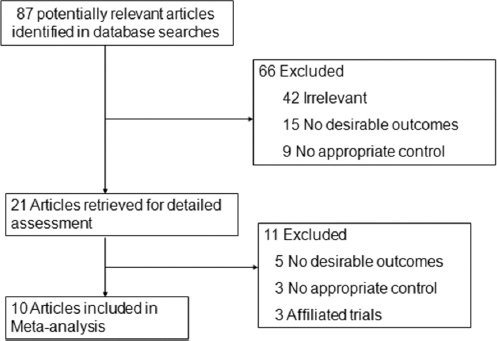
Figure 1. Flowchart of the results of the literature search.
Table 1. Overview on surgical and oncological outcomes reported or retrieved from included studies
| Author, Year | Country | Study design | No. of patients | Sex (male/female) | Mean age (Years) | Median primary Tumor size (cm) | Type of surgery on primary tumor | Complications | Follow-up (months) | Quality scorea | ||
|---|---|---|---|---|---|---|---|---|---|---|---|---|
| PD | DP | Enucleation | ||||||||||
| Bertani et al. 201314 | Italy | Retrospective | 43 | 20/23 | - | - | - | 3/12 | 60 | 7/9 | ||
| Bertani et al. 201615 | Italy | Retrospective | 124 | 66/58 | 54.6 | 6.0 | 0 | 63 | 0 | 10/63 | 96 | 7/9 |
| Bettini et al. 200910 | Italy | Retrospective | 51 | 24/27 | 55 | 4.5 | 5 | 14 | 0 | 8/19 | 26 | 7/9 |
| Citterio et al. 201616 | Italy | Retrospective | 36 | - | - | - | - | - | 127 | 6/9 | ||
| Du et al. 201517 | China | Retrospective | 98 | - | - | - | - | - | - | 5/9 | ||
| Hüttner et al. 201518 | Germany | Retrospective | 442 | 247/195 | pPanNEN-R: 52.9 PanNEN-nR: 59.6 | - | - | - | pPanNEN-R: 32.5 PanNEN-nR: 17.6 | 7/9 | ||
| Lin et al. 201819 | China | Retrospective | 63 | 28/35 | pPanNEN-R: 49.1 PanNEN-nR: 49.0 | 4.0 | 8 | 25 | 2 | - | 37 | 7/9 |
| Nguyen et al. 200720 | Italy | Retrospective | 51 | - | - | - | - | 5/20 | 41 | 6/9 | ||
| Partelli et al. 201521 | Italy | Retrospective | 148 | 83/65 | pPanNEN-R: 73 PanNEN-nR: 75 | pPanNEN-R :4.8 PanNEN-nR: 4.4 | 19 | 52 | 2 | 112/148 | 40.5 | 7/9 |
| Solorzano et al. 20014 | USA | Retrospective | 96 | - | - | - | 4 | 12 | 0 | - | - | 6/9 |
| a Quality scores of the included studies were assessed using the Newcastle–Ottawa Scale (NOS), with scores expressed as “actual score/maximum possible score9”. PD: pancreaticoduodenectomy; DP: distal pancreatectomy; pPanNEN-R: palliative pancreatic neuroendocrine tumor resection, PanNEN-nR: PanNEN-non-surgical management. | ||||||||||||
Outcome measures
A total of 373 patients who underwent primary tumor resection and 779 patients who allow non-surgical management were analyzed. The 5-year OS was 48.26% in the pPanNEN-R group compared with 22.34% in the PanNEN-nR group, and the 5-year OS was significantly higher in pPanNEN-R group than in the PanNEN-nR group (OR = 0.32, 95% CI 0.24-0.43, p < 0.00001) (Fig. 2). The publication bias confirmed by the Begg’s and Egger’s tests did not appear significant (Pr > |z| = 1.000, P > t = 0.795) (Figs. 3 and 4).
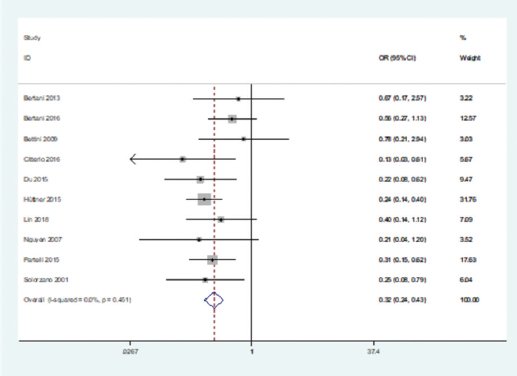
Figure 2. Meta-analysis of 5-year overall survival for palliative pancreatic neuroendocrine tumor resection group versus PanNEN-non-surgical management group.
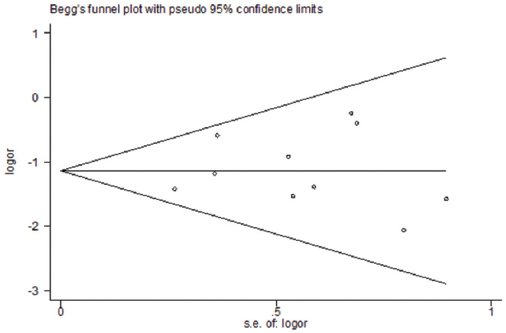
Figure 3. Begg’s funnel plot for visual assessment of no publication bias for 5-year overall survival.
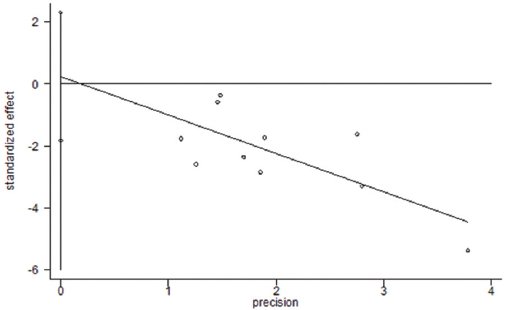
Figure 4. Egger’s publication bias plot showed no publication bias for 5-year overall survival.
Five studies reported the 30-day post-operative complications in patients who underwent pPanNEN-R, the overall complication rate reached 52.7%. Post-operative complication was mainly related to the formation of pancreatic fistula. Thirty-day readmission, length of stay, or quality of life data were not reported by any of the ten studies.
Discussion
Studies exploring the role of pPanNEN-R were considered in this review, but these studies have some limitations. These studies were not randomized trials, and almost all series were retrospective with limited sample sizes.
Surgical resection of the primary tumor site in patients with metastatic PNET is a controversial practice, especially in patients with advanced disease. In regard of primary resection, international guidelines distinguish tumor arising from the small intestine and those arising from pancreas.22,23 Resection of primary tumor is strongly recommended for intestinal tumors, whilst the resection of the primary tumor in metastatic PNETs is not recommended.22-24 This distinction is mainly related to the high risk of post-operative morbidity after pancreatic surgery.
However, a positive impact on prognosis after resection of the primary tumor has also been reported for PNETs. Zheng et al.25 reported resection of the primary tumor was associated with prolonged survival in all patients with gastric, small intestinal, colorectal, and pancreatic neuroendocrine neoplasms with liver metastases. Tao et al.26 reveals that local treatment on the primary benefits OS in PNETs patients with liver metastases. Chen et al.27 illustrated primary tumor resection led to improved survival for gastrointestinal neuroendocrine carcinoma patients with non-resected liver metastases regardless of primary tumor site, tumor grade, and N stage. Our meta-analysis showed that primary tumor resection provided a significant benefit for 5-year OS in PNETs patients with liver metastases.
There are two possible explanations for the survival-prolonging effect of primary tumor resection. First, a reduction in immunosuppressive tumor burden may prolong prognosis by minimizing the chance that the tumor will lead to disease progression and further metastasis. Second, resection of the primary lesion helps to relieve symptoms of the tumor, such as bleeding, obstruction, and symptoms of tumor compression, control symptoms caused by functional tumors, and helps to focus subsequent therapy on liver metastases treatment. The actual mechanism of how primary tumor resection contributes to improved prognosis remains unclear. In the era of personalized therapy, primary tumor resection should be viewed as part of an integrated multidisciplinary approach to optimize the treatment of patients with Stage IV pancreatic neuroendocrine neoplasm.
Despite the fact that more than half of patients faced a post-operative complication, the majority of resections involved the tail of the pancreas, and surgical sequelae can usually be managed safely.
There are some limitations in our study. First, most of the included studies were retrospective chart reviews with inherent limitations such as selection bias and inaccurate or missing data reports. Second, our analysis only included published studies in English. Hence, our findings must be interpreted with caution.
Conclusions
The present study provides a meta-analysis of palliative surgical approach to patients with PNETs associated with liver metastasis, exhibiting an obvious survival benefit of primary tumor resection over time. However, the included studies were subject to selection bias. A RCTs comparing pPanNEN-R associated with non-surgical treatment versus non-surgical treatments alone is urgently needed.
Funding
The authors declare that they have not received funding.
Conflicts of interest
The authors declare no conflicts of interest.
Ethical considerations
Protection of humans and animals. The authors declare that no experiments on humans or animals were performed for this research.
Confidentiality, informed consent, and ethical approval. This study does not involve personal patient data, medical records, or biological samples, and does not require ethical approval. SAGER guidelines do not apply.
Declaration on the use of artificial intelligence. The authors declare that no generative artificial intelligence was used in the writing or creation of the content of this manuscript.
